Thinking About Cleaning Moss Off Your Roof Yourself? Here's What Maine Homeowners Learn the Hard Way


By  • September 11, 2026

Across hundreds of roofs serviced throughout Maine and Southern New Hampshire, the pattern is consistent: homeowners who waited, or who tried to handle it themselves first, almost always ended up with a bigger problem than the one they started with. roof moss removal looks straightforward from the ground. Get up there, scrub it off, maybe spray something on it. But the way that moss is removed — and the sequence in which the work is done — determines whether your roof survives the next decade or needs replacing years ahead of schedule. If you own a home in Maine, where humid summers and shaded rooflines create near-perfect conditions for moss and black algae to take hold, understanding what separates a proper treatment from a damaging one is worth your time before you make a decision you cannot undo.

Why Pressure Washing Your Roof Is One of the Costliest Mistakes a Maine Homeowner Can Make

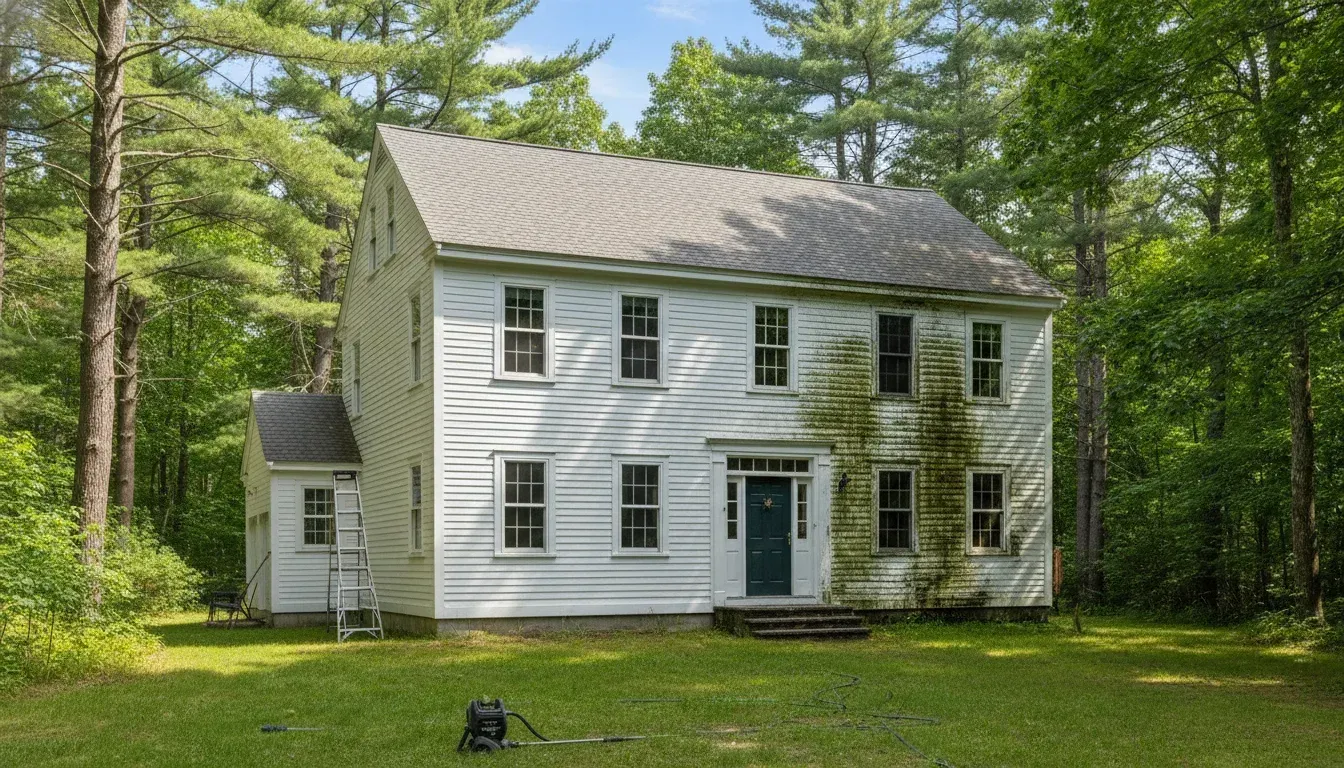
The most common mistake in roof moss removal is also the most understandable one. You see the moss, you own or rent a pressure washer, and you figure that what works on a driveway should work on shingles. It does not — and the damage it causes does not always show up immediately, which makes it especially dangerous.

Asphalt shingles are coated with granules that protect the underlying substrate from UV exposure and moisture. High-pressure water strips those granules. You will not see the damage from the ground. You may not even notice it for a season or two. But those granules are not coming back, and once they are gone, the aging process of your roof accelerates significantly. What might have been a roof with 10 to 15 useful years left can be reduced to 4 or 5 years of functional life after aggressive pressure washing — not because of the moss, but because of how the moss was removed.

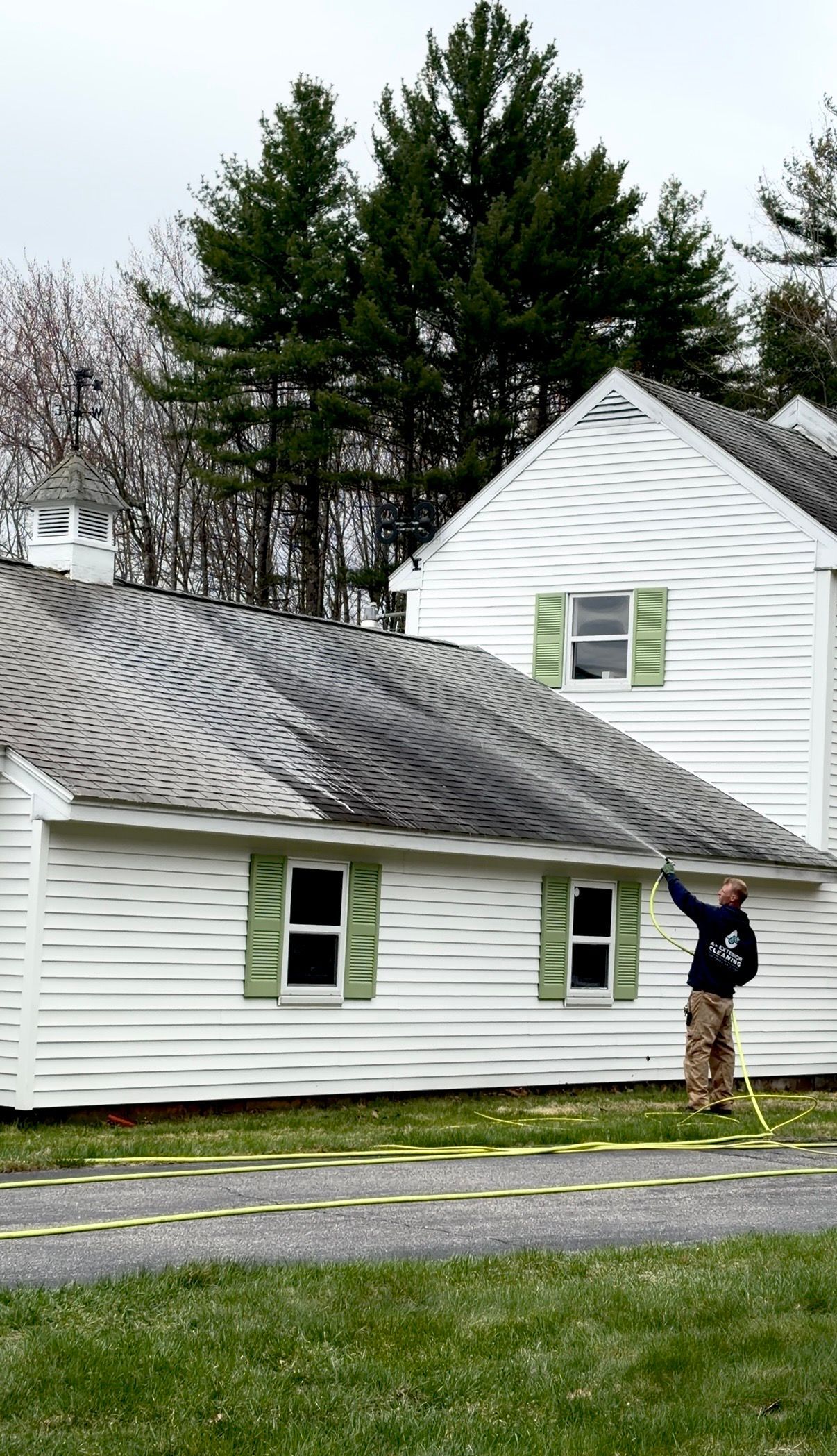
This is the problem that A Plus Exterior Cleaning was built to solve. Aaron Hebert founded the business after noticing that across Maine and Southern Maine, the overwhelming majority of homes had moss or black algae on their roofs — and that the most common "treatments" being offered were doing as much harm as the growth itself. The approach at A Plus is built around soft washing: low-pressure application of professional-grade cleaning solutions that kill the organic growth at the root without touching the granule layer. Moss is physically removed by hand as much as possible before any solution is applied, which accelerates visible results rather than leaving homeowners waiting months for a spray-only treatment to show progress. That physical removal step is where most competitors take a shortcut. It is also what makes the difference between a roof that looks clean in 30 days versus one that looks the same for 6 months while the biology continues to work underneath.

What Roof Moss and Black Algae Are Actually Doing to the Shingles Beneath Them

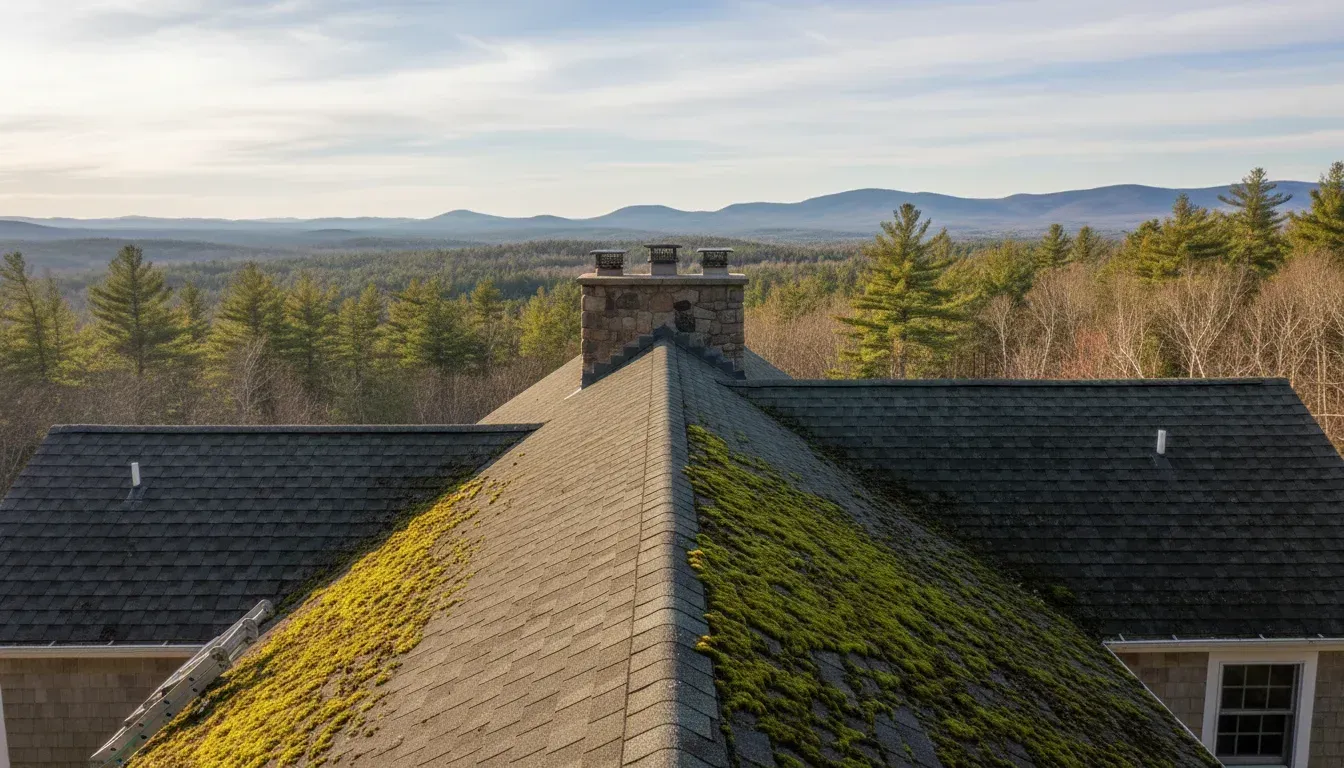
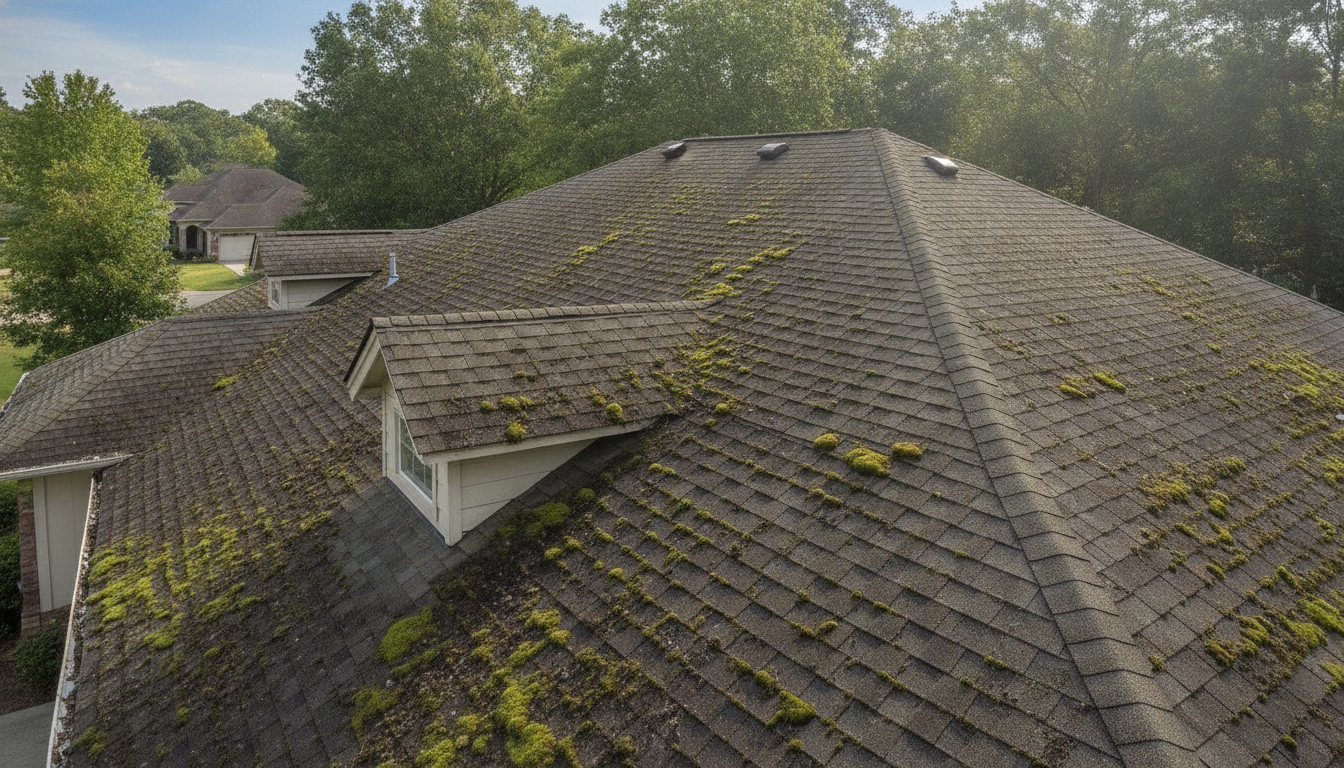
Moss and algae are not cosmetic problems. That distinction matters because it changes how you prioritize the work. When moss establishes itself on a shingle roof, its root structures — called rhizoids — physically penetrate the shingle material. As the moss expands and contracts through Maine's freeze-thaw cycles, those root systems work like small levers, gradually lifting the shingle edges. Lifted shingles allow wind and water to get underneath in ways the roof was never designed to handle.

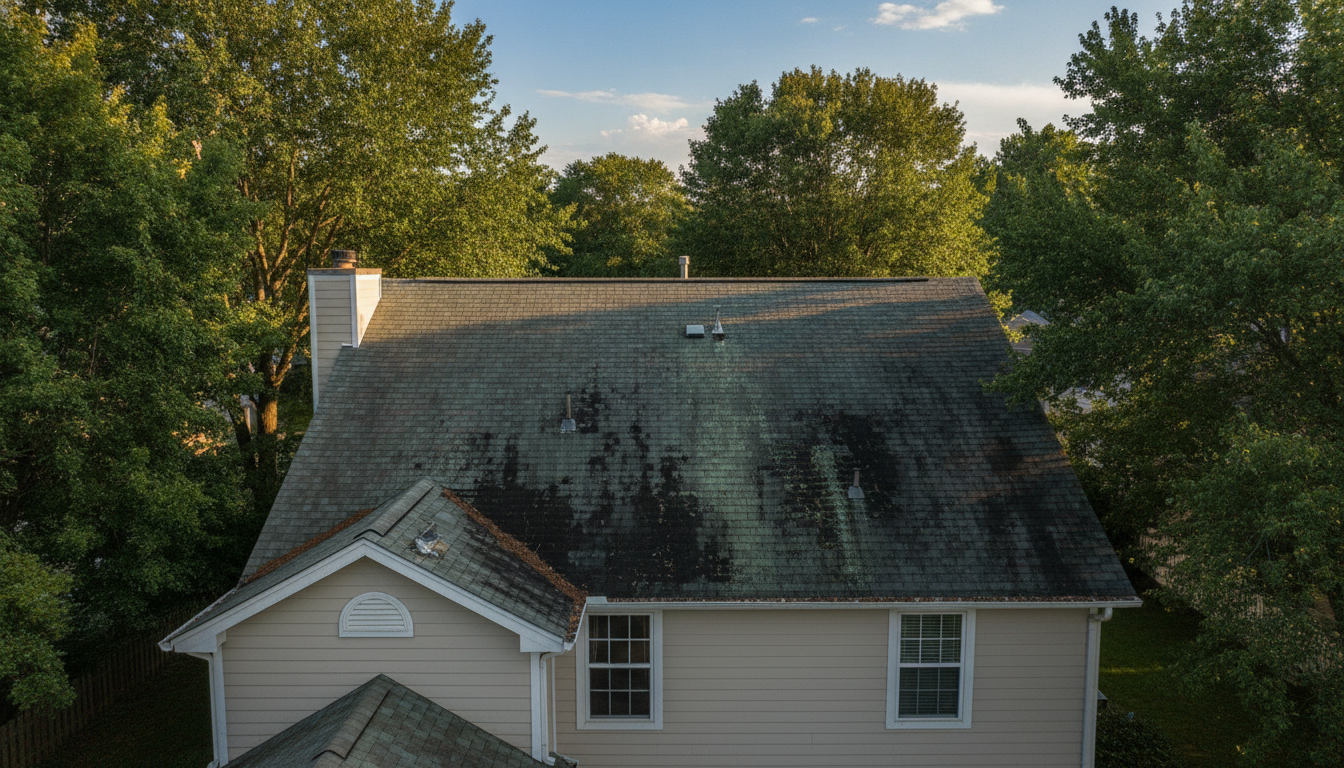
Black algae, which technically is a cyanobacteria called Gloeocapsa magma, creates a different kind of damage. It feeds on the limestone filler in asphalt shingles, metabolizing the material that gives the shingle its body. The dark staining you see is actually a protective coating the algae produces to shield itself from UV light. It is a sign the organism is well-established, not that it just arrived. By the time black algae is visible from the ground, it has typically been active on the roof for at least one full growing season.

In Maine's climate — where roofs deal with heavy snowpack, repeated freeze-thaw events between October and April, and significant moisture from coastal and inland weather systems — this biological activity compounds faster than it does in drier regions. A roof in Portland or Scarborough that develops moss on a north-facing slope in spring will see that growth spread and deepen by fall if nothing is done. The investment in proper roof moss removal and gutter cleaning together is measured in hundreds of dollars. The cost of a full roof replacement in Maine runs into the tens of thousands. Aaron Hebert has documented cases across his client base where the right intervention, timed correctly, extended a roof's functional life by a decade or more — savings that dwarf the cost of the service many times over.

Why the Combination of Roof Moss Removal and Gutter Cleaning Is More Than Routine Maintenance

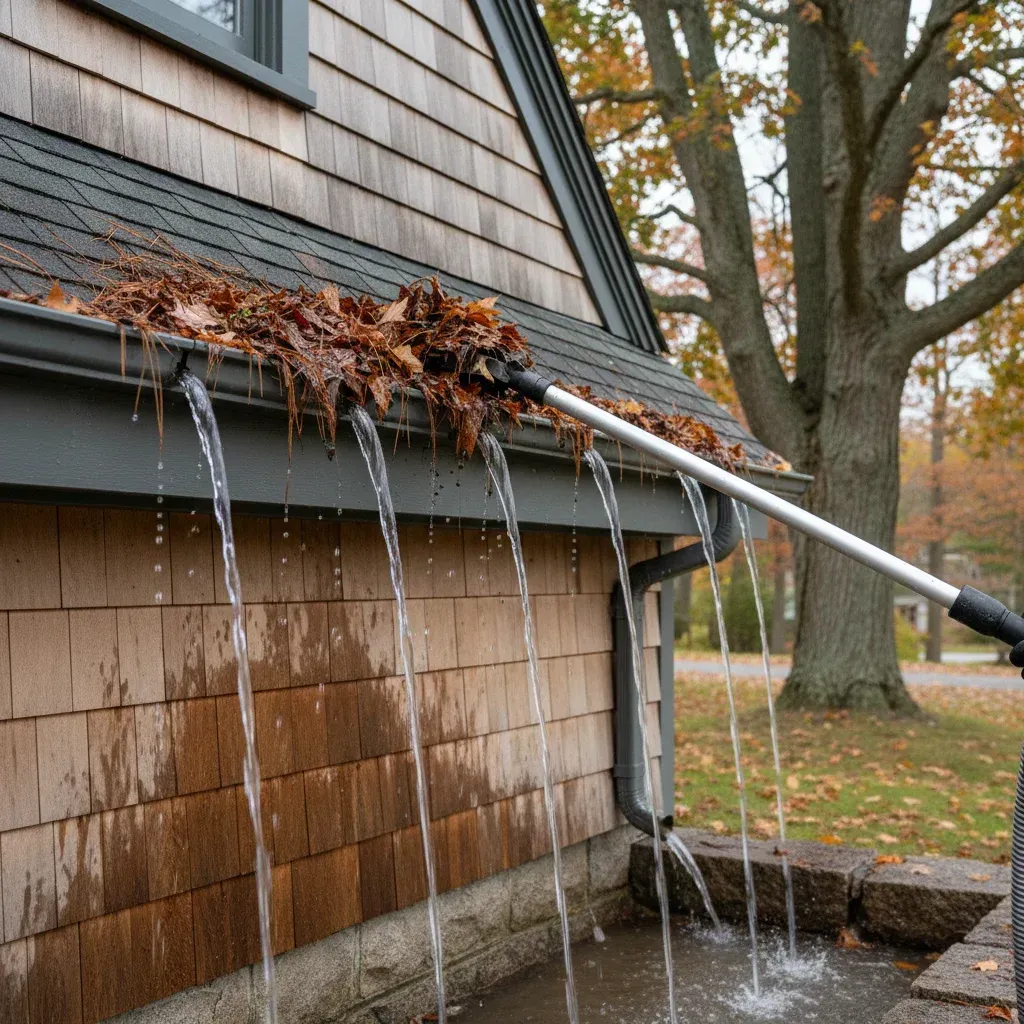
Roof moss removal and gutter cleaning are often treated as separate line items, scheduled at different times, sometimes with different contractors. That approach misses the relationship between the two systems. Gutters that are clogged with debris — including fragments of moss, algae, and decomposing organic material washed down from the roof — back water up in ways that accelerate exactly the conditions moss needs to thrive. Standing water at the roof's edge, slow drainage, and damp debris in the gutter channel all feed the next cycle of growth.

When gutters are cleaned as part of a roof treatment, the drainage system is restored to functional condition at the same moment the biological growth is addressed. That means the treated roof is not immediately fighting the same moisture conditions that allowed the growth to take hold in the first place. It is a more complete intervention, and it is why
A Plus Exterior Cleaning addresses both systems when the scope of work calls for it.

For homeowners in areas like Kennebunk, Cape Elizabeth, Falmouth, and Sebago Lake — where mature trees create significant shade over rooflines and organic debris accumulates in gutters through multiple seasons — this combined approach is not optional if the goal is lasting results. Shade means slower drying after rain. Slower drying means the shingle surface stays moist longer after every weather event. Moist shingles in shaded conditions are where moss re-establishes fastest after treatment. Maintaining the gutter system disrupts part of that cycle by keeping drainage moving the way it was designed to.

A Plus works with clients on this directly during the free in-person estimate — not as an upsell, but as part of explaining what the roof actually needs and why. Every client gets a walkthrough of the conditions present and what each element of the proposed work addresses. That educational component is built into the process, not an afterthought.

What a Professional Roof Moss Treatment Actually Involves — and How Long Results Last

A professional roof moss removal treatment has distinct phases, and understanding them sets realistic expectations for what happens after the work is done. The first phase is physical removal. A trained technician gets on the roof and removes as much active moss growth as possible by hand or with appropriate non-abrasive tools. This is physical labor. It takes time. Contractors who skip it are saving themselves work, not serving the homeowner — because moss left in place takes far longer to release after chemical treatment, and the visual result lags significantly.

The second phase is the soft wash application. Professional-grade biocidal solutions are applied at low pressure to kill remaining organic growth — moss root systems, algae, lichen — at a biological level. These solutions work progressively. The remaining organic material will continue to release from the shingle surface over the weeks and months following treatment, helped along by rain and weathering. This is normal and expected. A roof treated in May may look noticeably cleaner by July without anyone returning to it.

Results from a professional soft wash treatment, combined with proper physical moss removal, typically protect the roof surface for multiple seasons. The exact interval before re-treatment depends on the roof's orientation, the degree of surrounding shade, and the local moisture levels — all factors that vary across Maine's service areas from Portland south through Kittery and into the White Mountains region of New Hampshire. No honest contractor gives a single blanket timeline without accounting for site conditions.

What the treatment does not do is create a permanent barrier. Moss spores are airborne and present everywhere in the Northeast. A maintained roof in favorable conditions will eventually show new growth. The goal of professional treatment is not to seal the roof forever — it is to interrupt the current growth cycle, remove the established biology, and restore years of functional life that would otherwise be lost to untreated or improperly treated growth.

The Proof Is in the Roofs — Why Quality Over Volume Defines Every Job

Aaron's decision to keep A Plus Exterior Cleaning deliberately focused — servicing fewer jobs at a higher standard rather than scaling volume at the expense of results — comes directly from what he saw when he was learning the industry. Larger operations move fast. They have to, to stay profitable at scale. That speed shows up in the work: skipped steps, spray-only treatments, pressure washing used where soft washing is required, and crews who are not invested in the outcome of any individual roof because they are already thinking about the next one.

Every property that A Plus takes on receives a personal visit before any work is scheduled. The estimate is free and conducted in person. That visit is not a formality — it is how the scope of work gets defined accurately. The conditions on a north-facing roof in Westbrook look different from those on a coastal property in Wells, and the treatment needs to reflect that. Clients across the service area, from Yarmouth to North Conway, New Hampshire, have noted in their reviews that the communication, the follow-through, and the willingness to explain every step of the process set A Plus apart from contractors who show up, do the work, and disappear.

The track record across hundreds of roofs serviced — with nothing less than five-star reviews on Google and Facebook — reflects what happens when a business prioritizes the outcome on each individual roof over the number of jobs completed in a week. Your roof is the largest protective system your home has. It deserves that level of attention.

Your Roof Will Not Wait — and Neither Should Your Decision

Aaron started A Plus Exterior Cleaning five years ago because he saw a real problem going unaddressed across Maine: roofs being damaged not just by moss and algae, but by the wrong approach to treating them. That founding instinct — that doing the job correctly matters more than doing it cheaply or quickly — has guided every service call since.

If your roof has visible moss, black staining, or growth along the shingle edges, the biology is already active. Every season without treatment is another season of rhizoid penetration, granule displacement, and moisture retention working against the structure you are depending on. The cost of doing nothing, or of doing it wrong, compounds in ways that a single proper treatment would have interrupted years earlier. Reach out to A Plus Exterior Cleaning for a free in-person estimate — and find out exactly what your roof needs, explained clearly, before any work begins. That is the power of clean, applied with the integrity your home deserves.

Table of Contents

No headings found on this page.
Need a plumber?

We're local. We're fast. Let's talk.

SHARE THIS

Latest Posts

Garden workbench with cleaning supplies and tools on a sunny seaside patio
August 28, 2026
Algae, mildew, and grime build up fast on Maine homes. Learn when house washing is necessary, which method protects your siding, and why pressure washing the wrong way causes lasting damage.
White house with a curved roof and a person standing by the side wall near the corner
August 14, 2026
Wondering about roof cleaning moss removal cost in Maine and New Hampshire? Learn what drives pricing, what to avoid, and why the right approach saves you thousands.
July 25, 2026
Over the past 5 years, Aaron at A Plus Exterior Cleaning has helped hundreds of homeowners across Maine and Southern New Hampshire save their roofs — and in many cases, saved them tens of thousands of dollars in premature replacements. If you've noticed dark streaks running down your shingles or patches of green and black creeping across the surface, you're looking at a problem that does not resolve itself. Those stains are living organisms, and every month they remain on your roof, they're causing damage that compounds quietly until the bill becomes impossible to ignore. Moss removal and roof cleaning is not a cosmetic service — it's one of the most consequential forms of home maintenance a property owner in Maine can invest in. This article breaks down exactly what those stains are, why they spread faster in this region's climate, what a proper removal process looks like versus a shortcut that leaves the problem unresolved, and what to expect when you work with a company that takes this seriously.
White house with a curved roof and trees behind; a person stands at the front door on a wet day.
By A Plus Exterior Cleaning • April 29, 2026
Moss and algae are silently damaging roofs across Maine and New Hampshire. Learn how professional moss removal and roof cleaning protects your home's value and saves you from costly replacements.

Luxury single-story house at dusk with warm lights reflecting in a backyard pool
By A Plus Exterior Cleaning • April 29, 2026
Discover how permanent lighting installations from A Plus Exterior Cleaning in Maine and New Hampshire protect your home's value, eliminate seasonal hassle, and deliver lasting results year-round.